Charlotte can feel urban, historic, creative or quietly residential within a relatively compact map. To understand it, put neighborhood character beside the drive to work, airport travel, greenways and places you expect to use often.
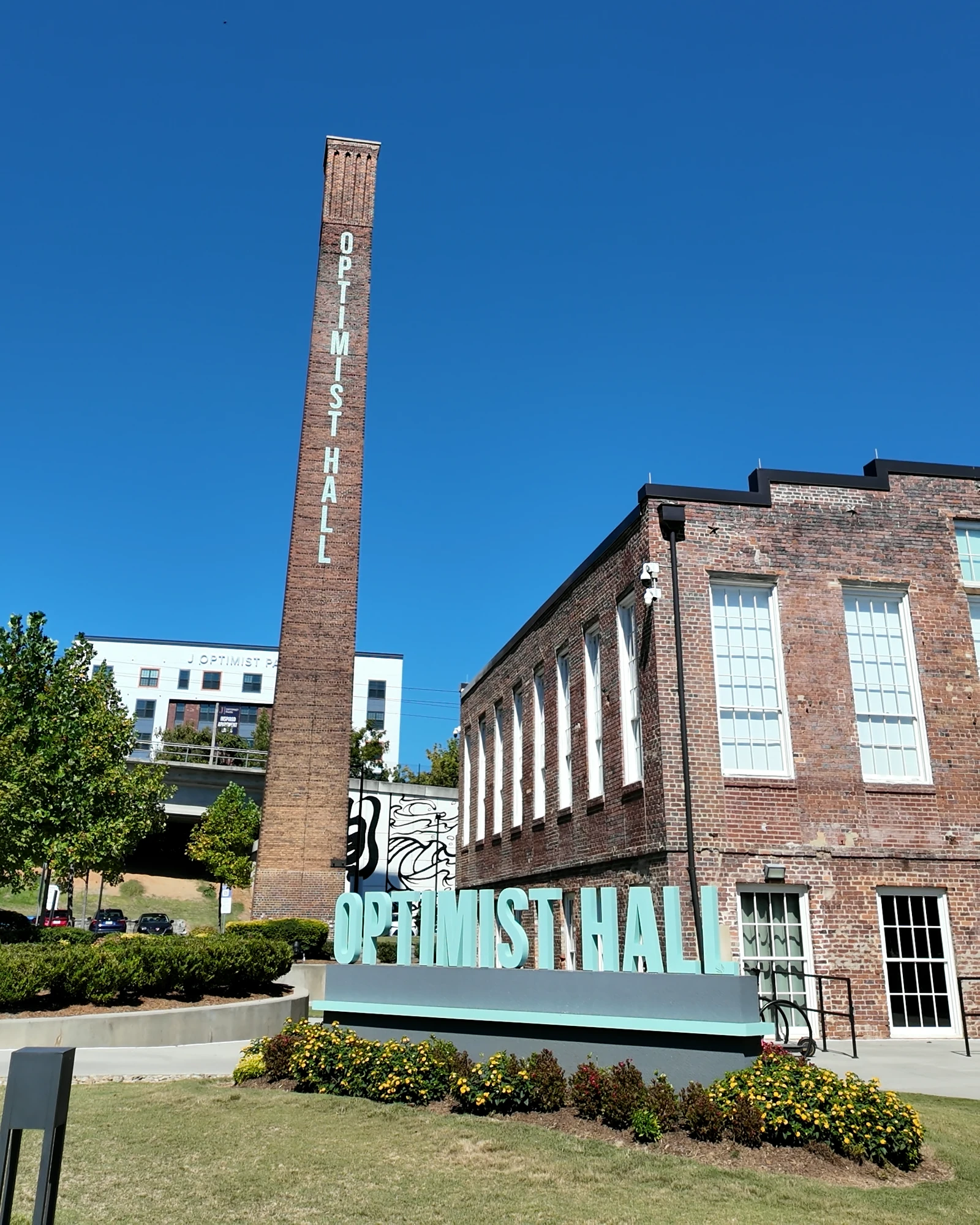
Tall windows, painted brick and shared tables give Optimist Hall its own character. I’d make it one stop in an Optimist Park visit, then spend time on the surrounding streets before narrowing a home search.
Compare the neighborhoods that give Charlotte its range.
01Uptown and South End
City energy and connected travel
Romare Bearden Park, the Blue Line, Bank of America Stadium, Truist Field and the restaurants around South End create a more urban Charlotte experience with daily destinations close at hand.
NoDa’s galleries and music venues, Plaza Midwood’s restaurants and neighborhood businesses and the older homes and newer infill between them create a distinctly local side of Charlotte.
03Myers Park, Dilworth and SouthPark
Established streets and polished convenience
Freedom Park, the Little Sugar Creek Greenway, Park Road Shopping Center and SouthPark’s retail and dining give these areas an established daily life without leaving Charlotte behind. Eastover, Foxcroft and Ballantyne create additional comparisons by home style and daily drives.
04Beyond the center
More space and wider connections
Camp North End, the Catawba River and the greenway network widen the map, while Ballantyne adds newer communities, employment centers, parks and a different relationship to the city center.
01
Map the places that repeat
Charlotte traffic can change quickly by time of day. Test the drive to Uptown, South End, the airport and employment centers from any neighborhood you are seriously considering.
A neighborhood that works beautifully on Saturday should also work on Monday morning.
02
Make room for the week you want
Light-rail access, nearby restaurants and events may matter most in South End or Uptown. An established street, larger lot or quieter evening may point toward Dilworth, SouthPark or areas farther out. The useful comparison is the one that matches how you spend your time.
03
Use culture and outdoors together
Professional sports at Bank of America Stadium and Truist Field, performances at Blumenthal Arts venues, museums in Uptown and the Little Sugar Creek Greenway give Charlotte a broad lifestyle range. Decide which choices need to be close and which can remain occasional.
I would compare Uptown, South End, NoDa, Plaza Midwood, Dilworth, Myers Park, SouthPark and Ballantyne by the home style, work route, airport access and places you use every week. Charlotte is too varied for a single ranking to be useful; the right shortlist starts with the address your week needs.
How should I compare Uptown, South End, Dilworth, Myers Park and SouthPark?
Start with the trade you are making. Uptown and South End put more activity and the Blue Line close by; Dilworth and Myers Park bring mature streets and established homes; SouthPark adds a major business and shopping center with a different residential pace. I would drive each area, then compare the homes and the Monday morning route.
How much does the Charlotte commute change by neighborhood?
More than a listing page can show. A trip to Uptown, the airport, SouthPark or the southern suburbs can change by address and departure time, especially around I-77 and I-485. Before you get attached to a home, I would run the route when you expect to use it and check the return trip too.
What changes when I move from Charlotte's center to SouthPark or Ballantyne?
The center gives you more nearby activity and, in parts of Uptown and South End, access to the Blue Line. SouthPark and Ballantyne bring more office, shopping and newer residential choices, but the daily drive becomes a larger part of the decision. I would compare the homes and the route together.
Personal guidance
Find your Charlotte routine.
A neighborhood shortlist becomes more useful when it reflects the way you actually want to live.