The useful starting point
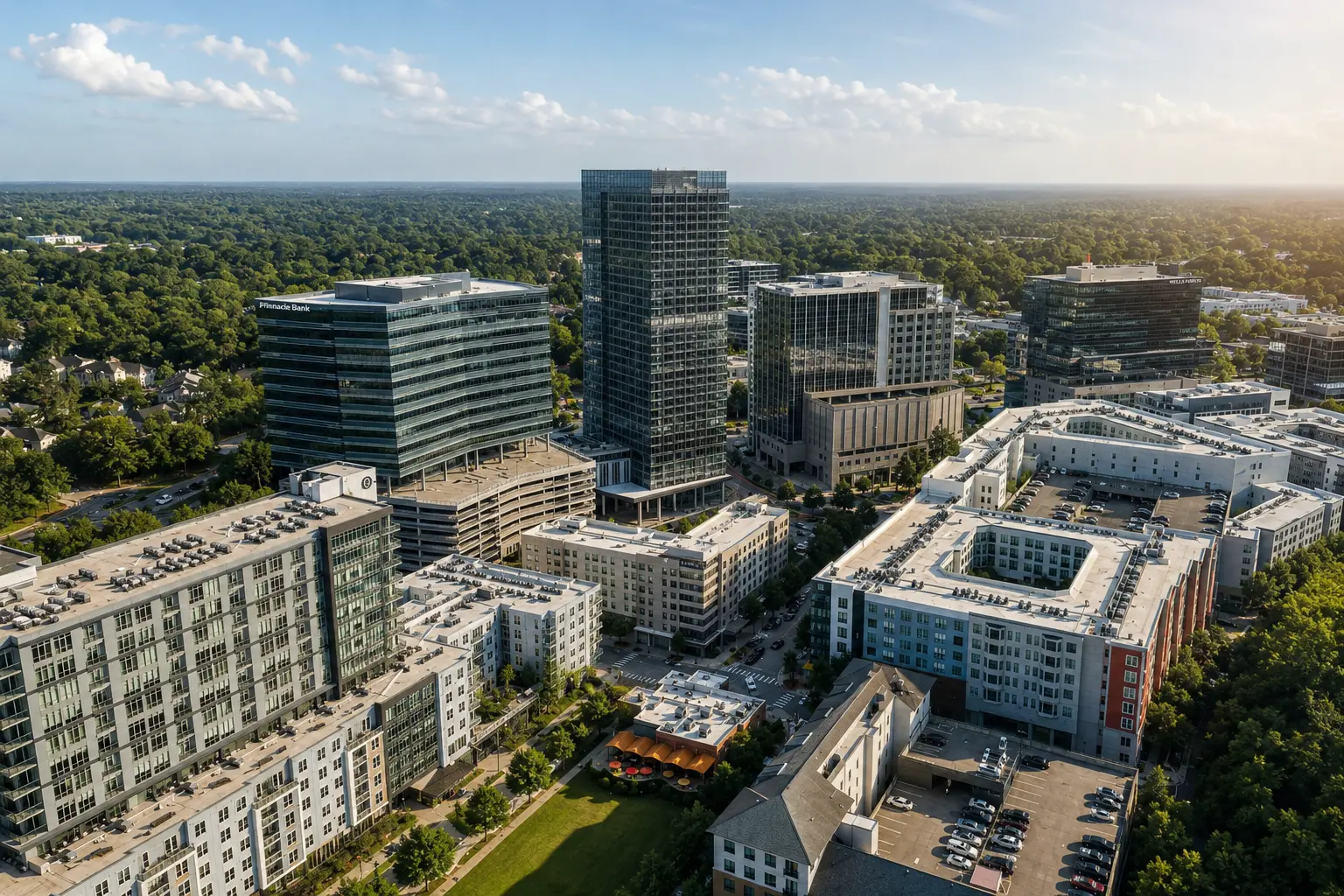
There is no best place to live in North Carolina in the abstract. From Raleigh’s ITB and North Hills to Charlotte’s established neighborhoods and Lake Norman’s towns and shoreline, the right choice is the one that makes your ordinary week work.
A simple way to compare them
Three regions, three ways to live.
Raleigh
It may suit you if: A connected capital city with research, healthcare, culture, greenways and distinct neighborhoods.
Pay attention to: The exact employment node, North Hills or Downtown access and whether nearby Cary, Apex, Durham or Chapel Hill should enter the comparison.
Charlotte
It may suit you if: Larger-city energy, major employment centers, airport access and sharply distinct urban and established neighborhoods.
Pay attention to: Uptown and South End proximity versus more residential settings, plus airport access and cross-city travel.
Lake Norman
It may suit you if: A closer relationship to the water with town life and access toward the Charlotte region.
Pay attention to: Waterfront versus access, bridge travel, cove conditions and how often you will travel toward Charlotte.
What makes a place a good place to live in North Carolina?
The answer is personal, but the comparison can stay practical. Look at the workday, travel, housing budget, home style, airport access, healthcare, outdoor time, restaurants, family connections and the places you expect to use often. Then test the finalists during an ordinary week instead of relying on a national list.
Raleigh: choose the part of the city that fits
Raleigh offers several distinct ways to live, from Downtown and Five Points to Midtown, North Hills and North Raleigh. Nearby communities add useful alternatives when the town setting supports the move, but they are separate housing decisions rather than interchangeable Raleigh neighborhoods.
- Anchor the search to the work or destination you will reach most often.
- Compare North Hills, Downtown, Five Points, Hayes Barton and North Raleigh using the same weekday test.
- Look at nearby communities when their daily life, neighborhood or home type genuinely fits.
Charlotte: decide how close to the city you want to feel
Charlotte offers several versions of city life. Uptown and South End place employment, dining, sports and light rail close to the center. Dilworth and Myers Park offer established streets and varied architecture near the urban core. SouthPark and Ballantyne shift the balance toward larger commercial hubs and residential settings, while Plaza Midwood brings a more independent dining and cultural feel. The tradeoff is often between central access, lot, home style and the drives you will repeat.
Lake Norman: choose the town before chasing the view
Davidson blends a defined town center with a smaller housing and waterfront supply. Cornelius offers marinas, condos, coves and close-in services. Huntersville can shorten the drive to Charlotte from the south end of the lake. Mooresville brings extensive shoreline and a wider housing range, while Denver offers a western-shore perspective and a different drive toward Charlotte and the airport. The tradeoff is rarely water versus no water alone; it is town, property type and the exact rights attached to the lake.
Compare communities at the property level
Within each region, home age, renovation standard, lot, association structure, taxes, insurance and current inventory can change the decision. Use the regional choice to narrow the map, then compare communities and properties with the same financial and practical scorecard.
Use a personal scorecard, not a generic list
Rank the factors that affect your real life: work and travel, budget, home style, airport access, healthcare, outdoor time, restaurants, family connections and renovation appetite. Visit finalists at the times you will actually use them, then compare available homes and current market conditions.
Questions clients ask
Best Places to Live in North Carolina FAQ
Where is the best place to live in North Carolina?
There is no single answer for every move. Raleigh, Charlotte and Lake Norman offer three different ways to live. Begin with budget, work and recurring travel, home style, city or town setting, outdoor time and the routine you want to build, then compare specific communities and homes.
What is the clearest way to choose between Raleigh, Charlotte and Lake Norman?
Compare work and airport access, preferred city scale, proximity to water, housing budget, home age and the destinations you use every week. Test those drives in person before narrowing the home search.
How do Raleigh, Durham, Chapel Hill, Cary and Apex differ during the week?
Raleigh offers several city and established residential settings; Durham and Chapel Hill have distinct university, cultural and employment centers; Cary and Apex offer different town centers and housing ages across the Triangle. The best comparison begins with the exact weekday map.
If Charlotte is on my list, which areas should I see before I widen the map?
Begin with the relationship you want to Uptown, employment, airport travel and recurring destinations. Then compare closer-in areas such as South End, Dilworth, Myers Park and Plaza Midwood with SouthPark, Ballantyne and other residential options.
Can I enjoy Lake Norman and still keep a Charlotte workweek workable?
It can be, but the answer depends on the exact home, work location, bridge or interstate and travel time. Test the trip during normal weekday conditions and weigh it against the value you place on the lake setting.